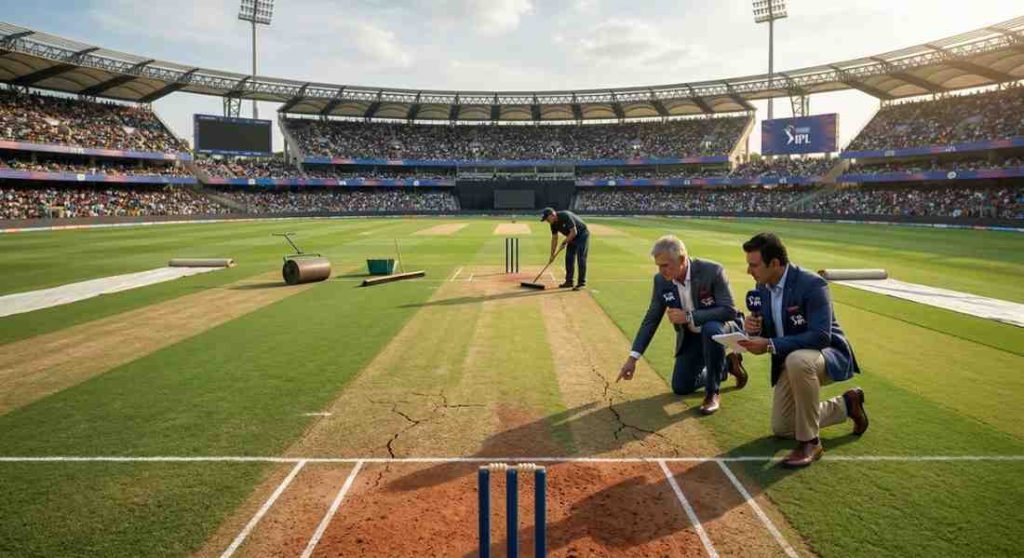
IPL cricket has evolved into a format where tactical preparation often begins days before the toss. Teams now study venue-specific scoring patterns, seam movement tendencies, square dimensions, and dew probability with extraordinary detail because conditions directly influence team balance and match tempo. Analysts tracking modern T20 cricket increasingly treat surface behavior as a strategic variable rather than a background detail. During these discussions, the value of the IPL today match pitch report becomes especially important because pitch conditions now shape bowling rotations, batting intent, and field placements throughout the innings.
Recent IPL seasons have shown major differences between venues. Hyderabad and Bengaluru consistently rewarded aggressive batting due to true bounce and shorter boundaries, while Chennai and Lucknow produced slower contests requiring technical adaptability against spin. Franchises capable of adjusting their strategy according to venue conditions generally maintained stronger consistency across the tournament. The modern IPL environment therefore rewards tactical flexibility more than one-dimensional aggression.
Surface Conditions Influence Team Balance
Pitch characteristics significantly affect playing combinations before the match even begins. A hard surface with visible grass generally supports fast bowlers during the opening overs, while dry tracks increase the importance of spin through the middle phase. Teams therefore adjust bowling attacks according to expected surface behavior rather than relying only on reputation.
Batting order flexibility has also become important. On slower venues, teams prefer technically compact batters capable of rotating strike effectively, whereas flatter grounds encourage aggressive hitters higher in the order.
Powerplay Strategy Has Changed Rapidly
The IPL’s batting philosophy has transformed during recent seasons. Teams now target high-risk scoring during the powerplay because statistical analysis shows early momentum creates pressure on opposition captains immediately.
Opening batters increasingly attack length deliveries rather than waiting for loose balls. Ramp shots, shuffle movements, and lofted drives over the infield are now deliberate tactical options designed specifically for field restriction overs.
Venue Trends Matter More Than Overall Reputation
Franchises study historical venue patterns carefully because not every stadium rewards identical strategies. Jaipur, for example, generally produces lower scoring rates compared to Hyderabad because larger boundaries reduce six-hitting efficiency.
Meanwhile, Wankhede Stadium consistently favors chasing sides due to dew and batting-friendly conditions during evening matches. These venue trends influence toss decisions, bowling combinations, and batting tempo significantly.
Chennai Rewards Controlled Batting
Chepauk remains one of the IPL’s most tactically demanding venues. Batters who rely entirely on power often struggle because the surface slows down after the powerplay phase. Spin bowlers usually dominate middle overs there by forcing batters into difficult boundary options. Teams capable of rotating strike consistently often gain stronger control over innings progression.
Hyderabad Supports Aggressive Stroke Play
Rajiv Gandhi International Stadium has emerged as one of the league’s highest-scoring venues. Several recent matches crossed the 220-run mark because of even bounce and rapid outfield conditions. Bowling teams there rely heavily on slower deliveries and yorkers since predictable pace frequently disappears into the stands on shorter boundaries.
Ahmedabad Encourages Balanced Innings
Narendra Modi Stadium offers tactical balance because fast bowlers generally receive movement early before batting conditions improve later in the innings. Teams batting first often prioritize wicket preservation during the first four overs before accelerating aggressively once the ball softens.
Jaipur Changes Boundary Strategy
Larger square boundaries at the Sawai Mansingh Stadium alter batting plans noticeably. Placement and running between wickets become more valuable than constant aerial hitting. Spinners therefore attack more confidently there because mishit lofted strokes stay in the air longer compared to smaller grounds.
Middle Overs Continue Deciding Matches
Despite rising totals, middle overs remain the most important tactical phase in IPL cricket. Teams losing momentum between overs seven and fifteen frequently struggle to recover later, even with powerful finishers remaining.
Bowling captains now rotate bowlers according to matchup data rather than fixed overs. Wrist spinners, left-arm seamers, and pace-off specialists are used strategically against specific batting profiles.
Pace Variation Has Become Essential
Slower deliveries now form a major part of IPL bowling plans. Dry surfaces especially reward cutters and pace-off bowling because aggressive batters struggle to generate clean timing consistently. Fast bowlers capable of disguising release speed usually maintain stronger economy rates during death overs compared to bowlers depending purely on pace.
Wrist Spin Creates Pressure Quickly
Leg spinners continue holding enormous tactical importance because wicket-taking ability during middle overs changes momentum immediately. Captains often preserve overs from attacking spinners specifically for dangerous middle-order batters entering after strategic timeouts.
Left-Right Combinations Disrupt Bowling Plans
Batting teams increasingly maintain left-right combinations to force constant field and angle adjustments. This tactic prevents bowlers from settling into predictable lines. Against spin-heavy attacks, this rotational approach frequently creates scoring opportunities through altered boundary angles.
Death Overs Demand Tactical Execution
Finishing overs now require precision from both batters and bowlers. Yorkers alone are insufficient because elite finishers anticipate predictable plans rapidly. Successful death bowlers therefore combine slower bouncers, wide yorkers, and pace variation while continuously adjusting field placements.
Tactical Indicators Analysts Monitor Before Every Match
Professional analysts evaluate several factors before projecting likely match behavior. Surface appearance alone rarely provides complete tactical understanding.
Key indicators generally include:
- Grass cover and pitch hardness
- Fresh grass assists seam movement early.
- Hard surfaces maintain bounce longer.
- Boundary dimensions
- Smaller grounds encourage aerial hitting.
- Larger venues reward strike rotation.
- Dew probability
- Heavy dew reduces spin effectiveness.
- Chasing sides usually benefit under lights.
Batting Depth Has Become a Major Advantage
Modern IPL squads prioritize batting depth because uninterrupted scoring pressure matters more than preserving wickets excessively. Teams with capable number seven and number eight batters generally recover faster after collapses.
All-rounders therefore hold massive strategic value. Their presence provides balance while allowing teams to maintain aggressive intent deeper into the innings.
Final Thoughts
Can an IPL contest truly be evaluated without understanding venue behavior first? Surface pace, dew impact, boundary size, and bowling matchups now influence outcomes as strongly as player quality itself. Predicting the today IPL match winning team increasingly requires tactical reading of conditions rather than emotional assumptions based on star names. CBTF Speed News continues delivering IPL coverage, venue analysis, tactical reports, live updates, and cricket developments designed for readers seeking sharper insight into the modern T20 game.